
Performing Womanhood
Menstruation, Ritual, and Gender Construction in Ritu Kala Samskaram
DOI:
https://doi.org/10.70042/eroth/1001232Keywords:
Ritu Kala Samskaram, Gender Performativity, Menstruation, Ritual, WomanhoodAbstract
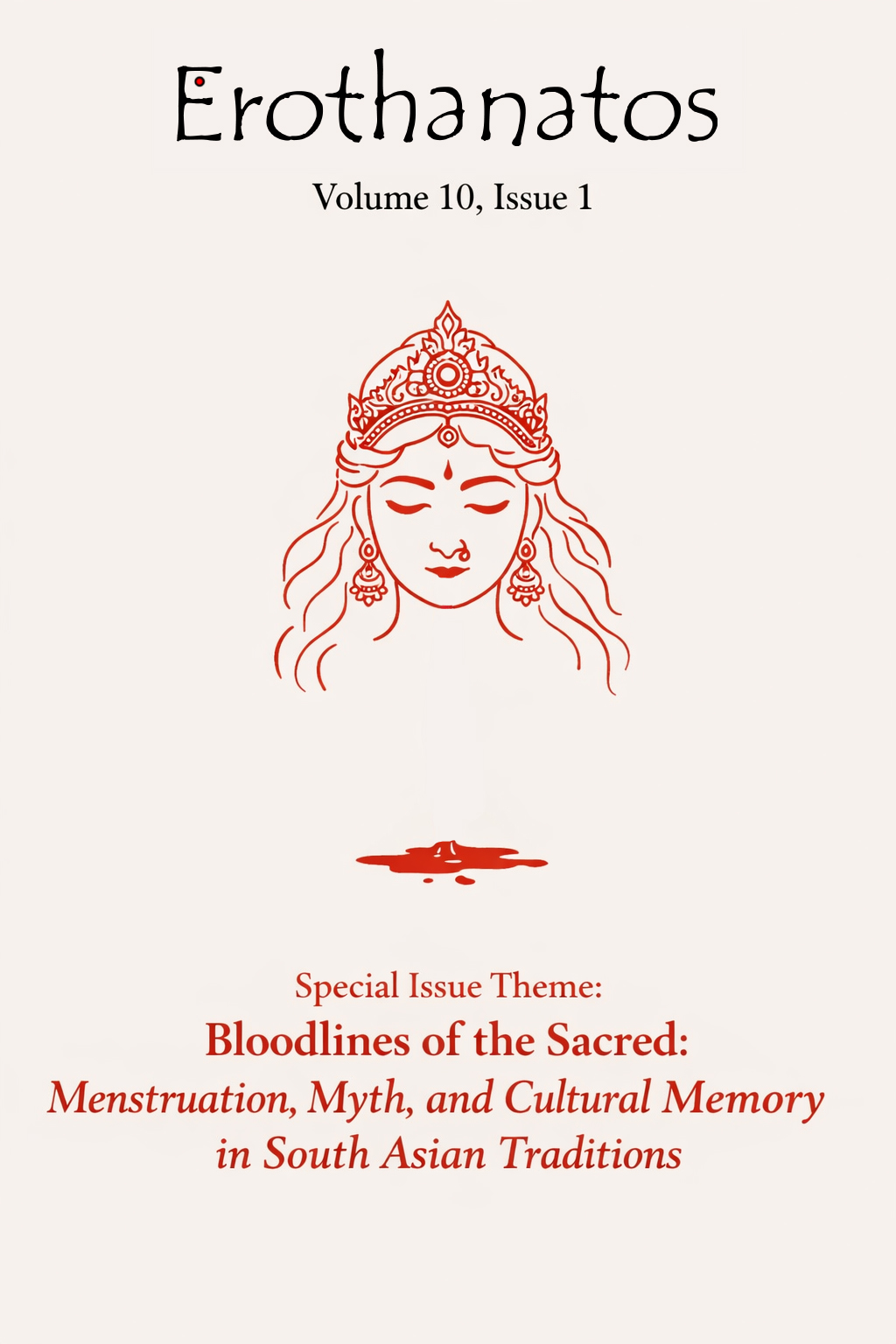
Menstruation, though a universal biological phenomenon, acquires culturally specific meanings through ritual, symbolism and social regulation. In India, menarche is frequently marked through ceremonies that publicly signal a girl’s transition into womanhood. This paper examines Ritu Kala Samskaram, a South Indian menarche ritual, as a critical site where gender identity is not merely recognized but actively produced. Drawing on Judith Butler’s theory of gender performativity, the study argues that womanhood emerges not as a natural outcome of biological maturation but as a culturally scripted identity constituted through repeated rituals. Through practices such as seclusion, ritual purification, adornment, and public celebration, the adolescent body is reconstituted as a socially acceptable feminine subject. The study demonstrates that menstrual initiation rituals operate as powerful ideological mechanisms through which gender is performatively produced, stabilised, and enforced. By reframing Ritu Kala Samskaram as a performative process rather than a neutral tradition, the paper highlights the ritual’s role in shaping gendered subjectivity and regulating womanhood within Indian cultural frameworks.
Downloads
References
Blakemore, S. J. “The Social Brain in Adolescence.” Nature Reviews Neuroscience, 2008, pp. 267- 277.
Butler, Judith. Gender Trouble: Feminism and the Subversion of Identity. Routledge, 1999.
---.“Performative Acts and Gender Constitution: An Essay in Phenomenology and Feminist Theory.” Theatre Journal, vol. 40, no. 4, Dec 1988, pp. 519- 531.
Caldwell, S. Oh! Terrifying Mother: Sexuality, Violence and Worship of the Goddess Kali. Oxford University Press, 1999.
Janhawi, Ankita Singh and Priya Sharma. “A Study on Indian Women and their Perspective on Menstruation.” International Journal of Applied Research, vol.11, no. 3, 2025, pp. 351- 357, https://www.doi.org/10.22271/allresearch.2025.v11.i3e.12443.
Urban, H. B. “Matrix of Power: Tantra, Kingship, and Sacrifice in the Worship of Mother Goddess Kamakhya.” Journal of South Asian Studies. Routledge, 3 Dec 2008, pp. 514 – 515.
Downloads
Published
Issue
Section
License
Copyright (c) 2026 Authors retain copyright and grant Erothanatos: A Peer-Reviewed Quarterly Journal on Literature the right of first publication. This work is licensed under a Creative Commons Attribution–NonCommercial (CC BY-NC 4.0) International License.

This work is licensed under a Creative Commons Attribution-NonCommercial 4.0 International License.
All articles and content published in Erothanatos are made available under the terms of the Creative Commons Attribution-NonCommercial 4.0 International License (CC BY-NC 4.0), unless otherwise stated. This license permits users to copy, distribute, display, and perform the work, and to make derivative works, for non-commercial purposes only, provided the original author(s) and source are properly credited.
Authors retain the copyright to their work. In cases where a special issue is priorly declared to be published in book form with an ISBN, the copyright and licensing terms for that publication will be specified separately and communicated to contributing authors in advance.
By submitting to Erothanatos, authors agree to the terms of this license and acknowledge that their work will be freely accessible to the public and may be used for academic, educational, and non-commercial purposes in accordance with the terms of the CC BY-NC 4.0 license.
For further details about the license, please visit the Creative Commons website.